An aficionado of high-end Americana finds eight ounces of pelt and 80 skilled hands under the brim of his new Stetson
Words by JAY FIELDEN
Archival images courtesy of STETSON
In the 1970s, when I was a kid growing up in San Antonio, we visited family on holidays who lived in far corners of the state. These were places still attached in rhythm and style to a time gone by — no grown man set foot outdoors without a western hat. The old-timers, the ones who’d made it in the oil, ranching, or other related business, mostly wore what was considered the “gentleman’s cowboy hat”: a Stetson Open Road. Or if they enjoyed dressing up when they weren’t in field clothes and embraced the flair of western wear — whipcord suits with yoked seams on the shoulders and darts shaped like arrowheads — they likely chose a silverbelly Range, with its narrow brim kicked up on the sides to form a pleasing little swoop cantilevered just over the brow. This was my grandad’s hat of choice, which, in old-Hollywood western style, he cocked to one side.
As I got older, I inherited a few family Stetsons. Some fit, some didn’t, but I kept them as signifiers of my past; they reminded me of the place and people I came from. When I began my career as a magazine editor and writer in New York, my grandad’s hat moved with me. Eventually, as the editor of several fashion and style publications, I got the opportunity to see and understand what true handmade luxury looks like up close. I traveled to the Veneto, a cradle of leather craft, to witness the creation of a bench made pair of brogues. I visited the ateliers of the world’s great bespoke tailors, from Savile Row to Naples. And I learned what a “MOF” is — the acronym (Meilleur Ouvrier de France) used to refer to the country’s topmost master craftsmen — and had seen them at work in couture houses. I somehow knew all this, and yet, until a recent visit to Stetson’s hat-making headquarters in Texas, had no idea that its extraordinarily painstaking process and meticulous standards of quality represent a true American equivalent.
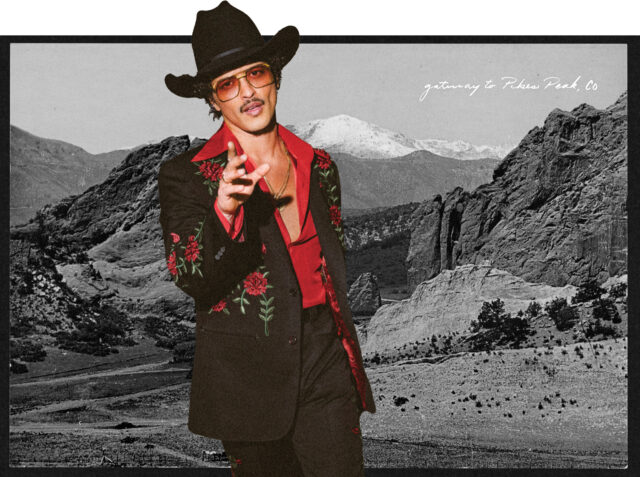
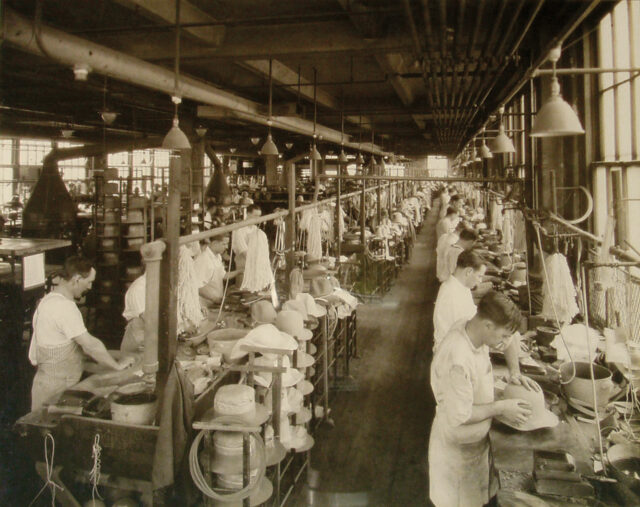
In case you haven’t noticed, cowboy hats are in the midst of a comeback, thanks to western hats being embraced as symbols of style across the pop-cultural spectrum, from big luxury fashion labels and major music icons to juggernaut TV shows. These days, as a result, Stetson not only makes three times more cowboy hats than it does any other style, its hat-making operation, which remains largely the same as it was more than a century ago, finds itself in a happy predicament. Like a small handful of top Swiss watchmakers or a certain maison of luxury French leathergoods, Stetson these days can barely keep up with demand. As with other artisanal enterprises that make exceptional things using traditional methods, Stetson’s output is a painstaking operation that hangs in the balance of three fluctuating ingredients: the finite availability of premium felting material; the limited number of highly trained human hands; and the mechanical dependability of a last-of-its-kind fleet of rare machines, some of which date back to 1892. At full hum, when everything’s moving in a synchronized flow, it takes about four weeks to transform an eight-ounce blob of down — mostly rabbit with varying amounts of beaver mixed in — into a Stetson. The former comes from Eastern Europe, where rabbit is often on the menu, and fur production is a by-product of the farming process. Beaver, however, must be trapped in the Canadian wild. Its fur, which is more water repellent, is less plentiful and more desirable. The more Xs a Stetson has — the range goes from six to a thousand X — the more beaver it contains, and the more $s it costs.
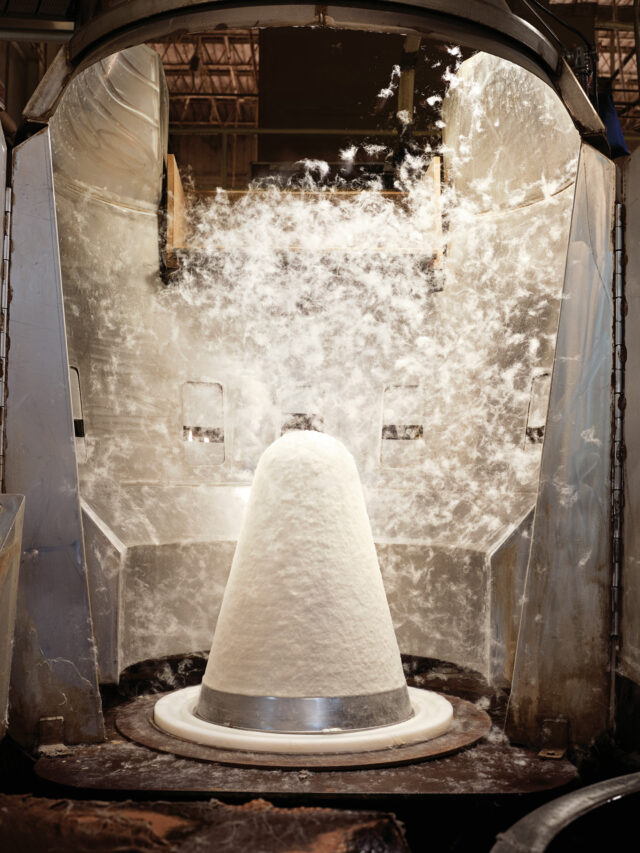
I say blob, but this was a blob unlike any I’d seen; it was fluffy and white and reminded me of a large, freshly whipped cloud of cotton candy. I was standing at the far end of a long, low-slung building in Longview, a town of some eighty thousand people in East Texas. The place had what you might call old-factory charm, including a hundred-yard wall of steel windows, industrial fans encrusted with ancient lint, and a giant retro sign — “Good Hats Make Steady Jobs” — that might have been hung when LBJ, an Open Road enthusiast, was president. Hat-business people call a place like this the “Back Shop.”
A dense, wild animal odor hung in the air, and wisps floated about the space like indoor snow, as fur from 250-pound bales was being blown through two very long shafts — antique cotton gins retrofitted with comb rollers. By this process, the hair is separated from the down, and it is down — when exposed to heat, moisture, and pressure — that miraculously forms into felt (as the Mongols, those twelfth-century cowboys of the Steppe, found out when the fur pelts they wrapped their feet with transformed through use into a material that was both insulating and waterproof).
In case you haven’t noticed, cowboy hats are in the midst of a comeback, thanks to western hats being embraced as symbols of style across the pop-culture spectrum.
Almost a thousand years later, Stetson’s process of making felt is a science that blends man and machine. But it still takes a lot of time for the trained hands of around eighty people divided among eight distinct and detailed jobs to turn that blob of down into an unshapen, floppy thing called a “hat body,” which is as much an approximation of a hat as a bolt of wool flannel is to a suit. One strangely looks like a Gemini space capsule, and the man or woman who operates what’s called The Former must, not unlike an astronaut, become one with the quirks of his machine. Those eight ounces of down are vacuum-sucked onto a large metal cone that you can see spinning through a port window of the Former’s closed hatch door. The cone, now flocked with down, is next hand-wrapped with a wet burlap blanket, sheathed with a second cone, and submerged in a nearby tub of water that’s been heated to 160 degrees. This step forces hot water through the mat of hair fibers, which, individually, look like barbed rose stems under a microscope, condensing and shaping them into what’s called a “boat sail” — a triangular cap whose name captures its exaggerated scale. At this point, it’s about eight times the size of the cowboy hat it will eventually become.
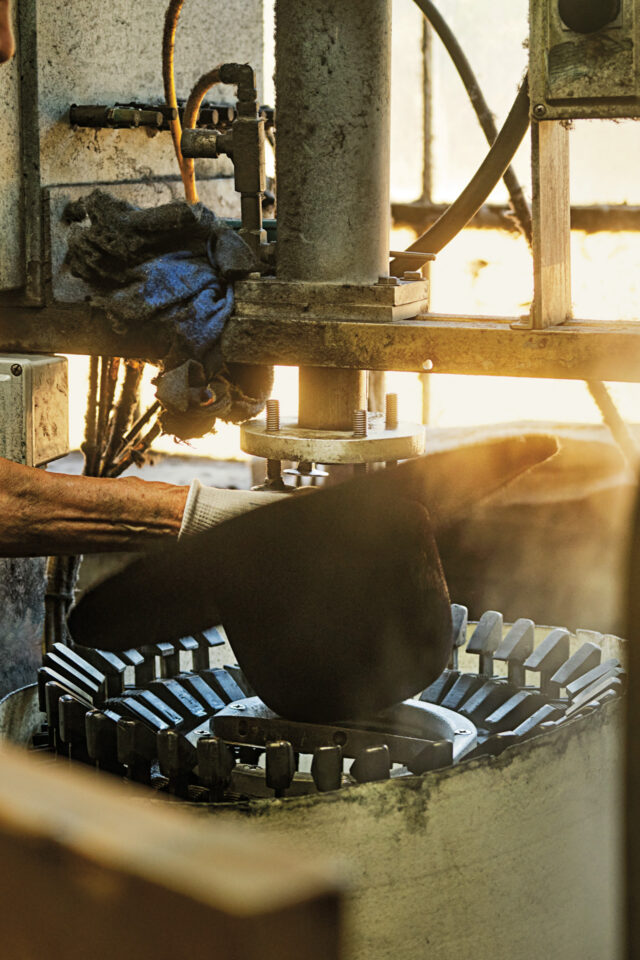
From there, each boat sail is cycled through a series of some seven different operations that pair specialized human expertise with specialized antique machinery prone to crap out. (The Back Shop maintains three machine shops on-site.) Station by station, the cap gets rolled under pressure, wrapped and rolled again, soaked, and squeezed until it becomes about a quarter of its original size. Then it gets dyed in large stainless steel vats (Stetson’s colorways are proprietary and mixed by hand in Longview) and lightly shellacked, which fortifies the felt to hold its future shape. That process begins with the “tipper,” who, now that the shrinking process has made the felt thick and dense, carefully applies the power of his shaping machine, which pushes and pulls the hat down over a molded block as he slowly works to define the crown.
The next and final step is “wet-blocking,” which also requires great touch and experience, knowing how to mold and stretch the felt without tearing it to shreds. A wet-blocking machine is a little like a giant waffle iron, except the hot ingredient is water. There are three of these machines, and they’re all ancient and finicky, requiring a new recruit anywhere from four to six months of training to become proficient. They also break down a lot. As a result the company recently commissioned a tool builder in Missouri to create a new one, based on the physical size and movements of an employee who has worked here for fifty-one years.
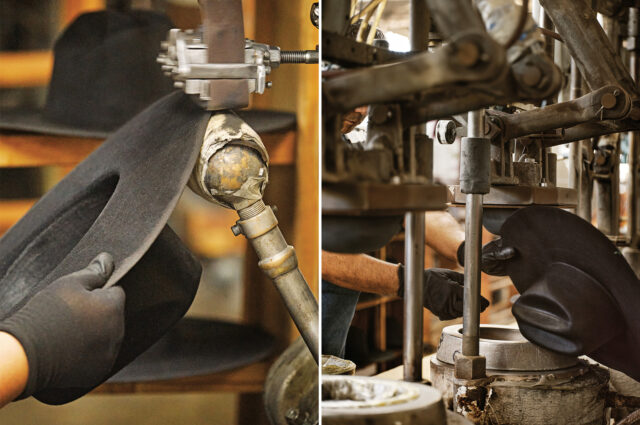
Instead of Model-T technology, the new Blocker is pneumatic and has a computerized brain. That doesn’t mean it operates itself. Among other things, not only does the hat have to be placed just so in order for a series of little finger-like clamps to hold onto the brim as a hot mold stamps down to further form the crown and “break” the brim, but a wet blocker has to know when the felt is the perfect stage of al dente so it’s neither too early nor too late to manipulate its shape.
After that, all that’s left is for the hats to dry before they get shipped a 120 miles west to Stetson’s “Front Shop,” which is located in Garland, a suburb of the Dallas metroplex.
The setup here is even bigger — there’s a separate factory building dedicated to making only straw hats, which amounts to about a third of Stetson’s overall production. Shafts of steam exhale toward the corrugated ceiling, and there’s a constant rat-tat-tat from a troika of irreplaceable Singer 103 sewing machines that were designed for one of the most challenging tasks in the whole factory — backstitching a hatband made of leather to the inner rim of the crown. “Dozens” — wood trolleys carrying hats in job orders of twelve — are everywhere, as they make some thirty different stops on the way to becoming a finished hat. (Stetson makes about 250 dozen per day.) A taste of these stops includes: two sessions of dry blocking; more shellacking; “pouncing” (a multistep process by which the felt is conditioned with fine oil and then sanded to achieve different textures); brim cutting; brim beveling; trimming (an eight-station process involving the creation of a Stetson’s interior features, from “swirling” the satin lining to sewing in the bow at the back); and two different points of inspection overseen by two of Stetson’s most veteran employees, who look for “dags,” color imperfections, “shoves,” anything that’s off. A hat that doesn’t make it past them is called a “knockdown.” About a hundred per day don’t meet the bar.
As anyone who owns a Stetson knows, there are many styles to consider, from the fedora-like Stratoliner and “crushable” outdoor numbers to the iconic, western-style Boss of the Plains. Part of figuring out which one’s right for you is learning a little about what the different creases and brim shapes mean. In the old days, they often signified a wearer’s profession — cowpunch, bronc rider, barrel racer, outlaw, or horse breaker, as Cormac McCarthy describes the hero of All the Pretty Horses, whose hat is mentioned repeatedly though never described. Stetson has some fifty-four different crown-style molds, and as many brim flange-molds as there are degrees to a parabola.
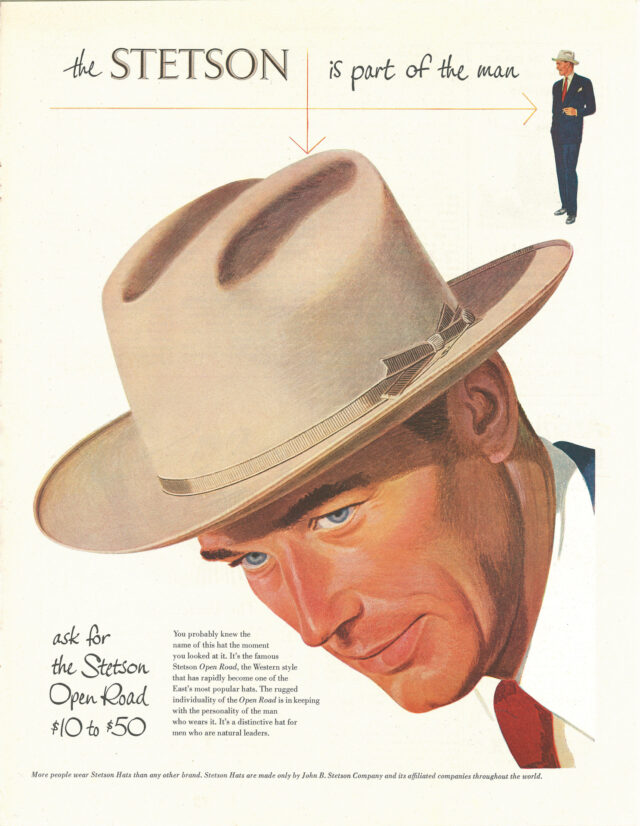
I, myself, prefer an Open Road, and have always owned one even when I was trying to convince people in New York that I didn’t have a Texas accent. At the factory, I felt I should try something new, so I plucked out a snuff-brown El Patron, a high-crown cowboy hat that strikes a note of self-possessed boldness. I wanted it to have a Cattleman crease with sides that curve sharply upward, like James Dean’s in Giant.
The factory manager and I walked over to the crown press. He put a crown mold in a small metal hole and placed the crown of the hat into it upside down. Then a hydraulic press descended, inflating a balloon to 100 psi where your head goes. After sixty seconds, out came the hat, its iconic crease beautifully minted. “Cattleman all day long,” he said, as we walked to a double-row of Flange Brim machines. The hat was again dropped in a hole and placed on a flange that looked like an upside down taco. A top mold squeezed the felt brim between the two pieces of metal, which had been steam-heated to 260 degrees.
He gingerly plucked the hat onto a second flange and lay several small sandbags on its brim so it would hold its shape as it cooled. After that, I put my hat on, so he could eyeball it for any imperfections. “Yes, sir,” he said, meaning, it had met the Stetson standard.
Only one thing left. A customary part of inspecting a hat is, as they say, “popping it.” You do this by gently pinching the front of the crown to test the resistance of the felt. Some people like a stiff hat that’s hard to pinch; others like one that’s softer and as a result makes a little pop as it reassumes its former shape.
“The sound is that immediate grati-fication,” my guide had told me back in Longview. “But the feel is what’s important.” I gave my El Patron a pop, which sounds more like a thwip. The sound was pleasing, indeed. But what he said was true: What makes a Stetson a Stetson is its feel, which is that of sculpted cashmere, and is something that’s easy to like. I have come to think this is one of the chief reasons I myself now rarely set foot outdoors without one on my head. Excerpted from Stetson: American Icon (Rizzoli, $100).
Feature image: A Stetson receives its final inspection.
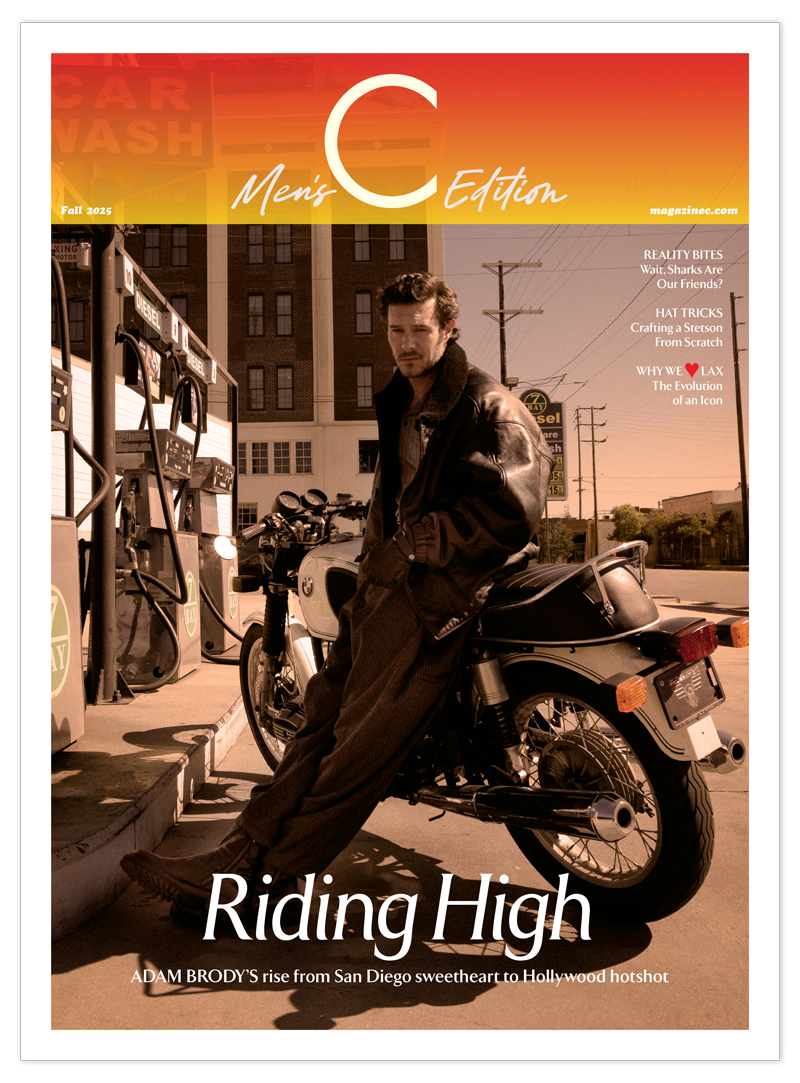
This story originally appeared in the Men’s Fall 2025 issue of C Magazine.
Discover more STYLE news.
See the story in our digital edition