From his hilltop perch, the pop artist takes us on a tour of his whimsical home, filled with stories of the era he helped define
Words by DAVID NASH
Photography by RAINER HOSCH
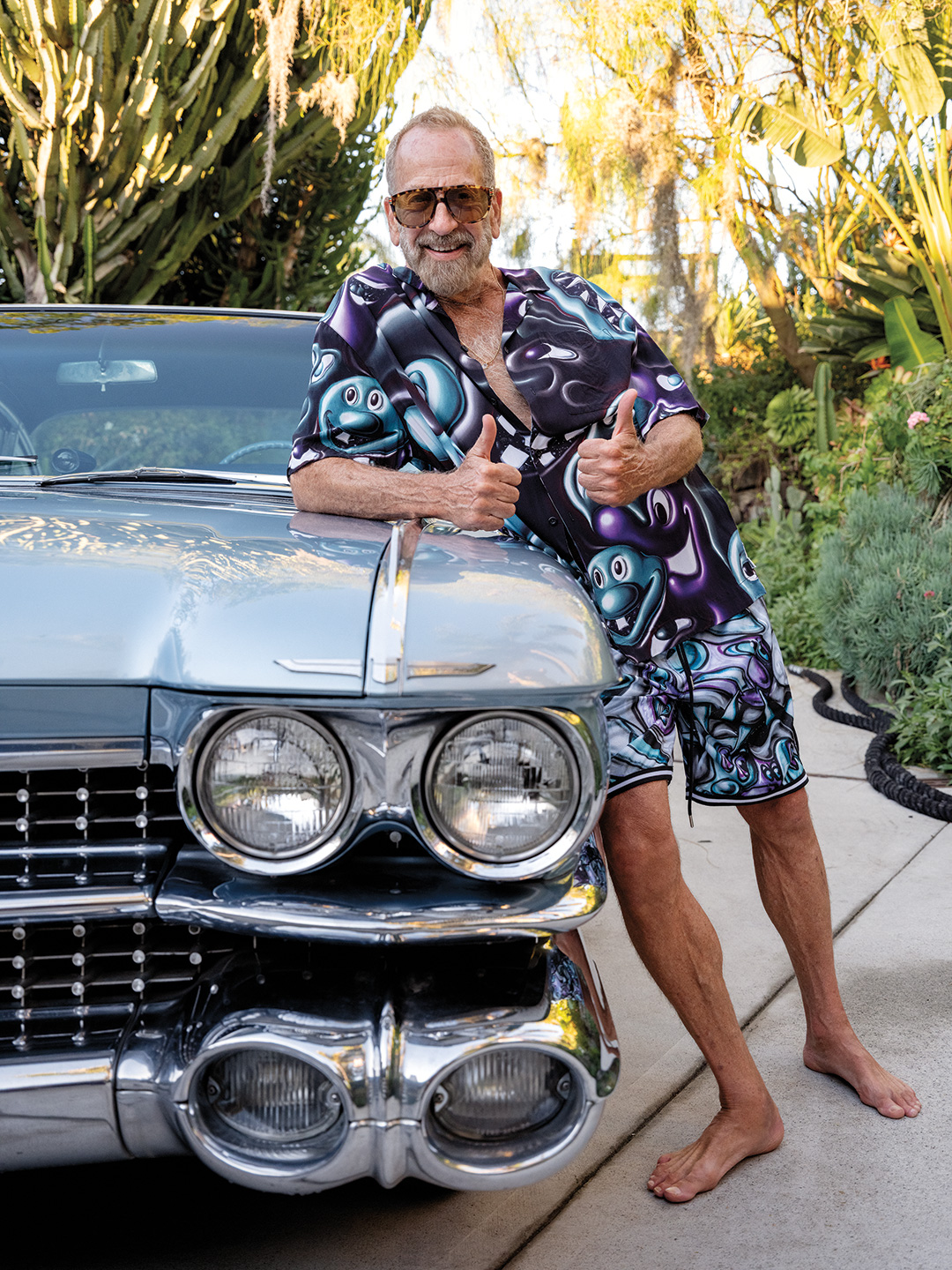
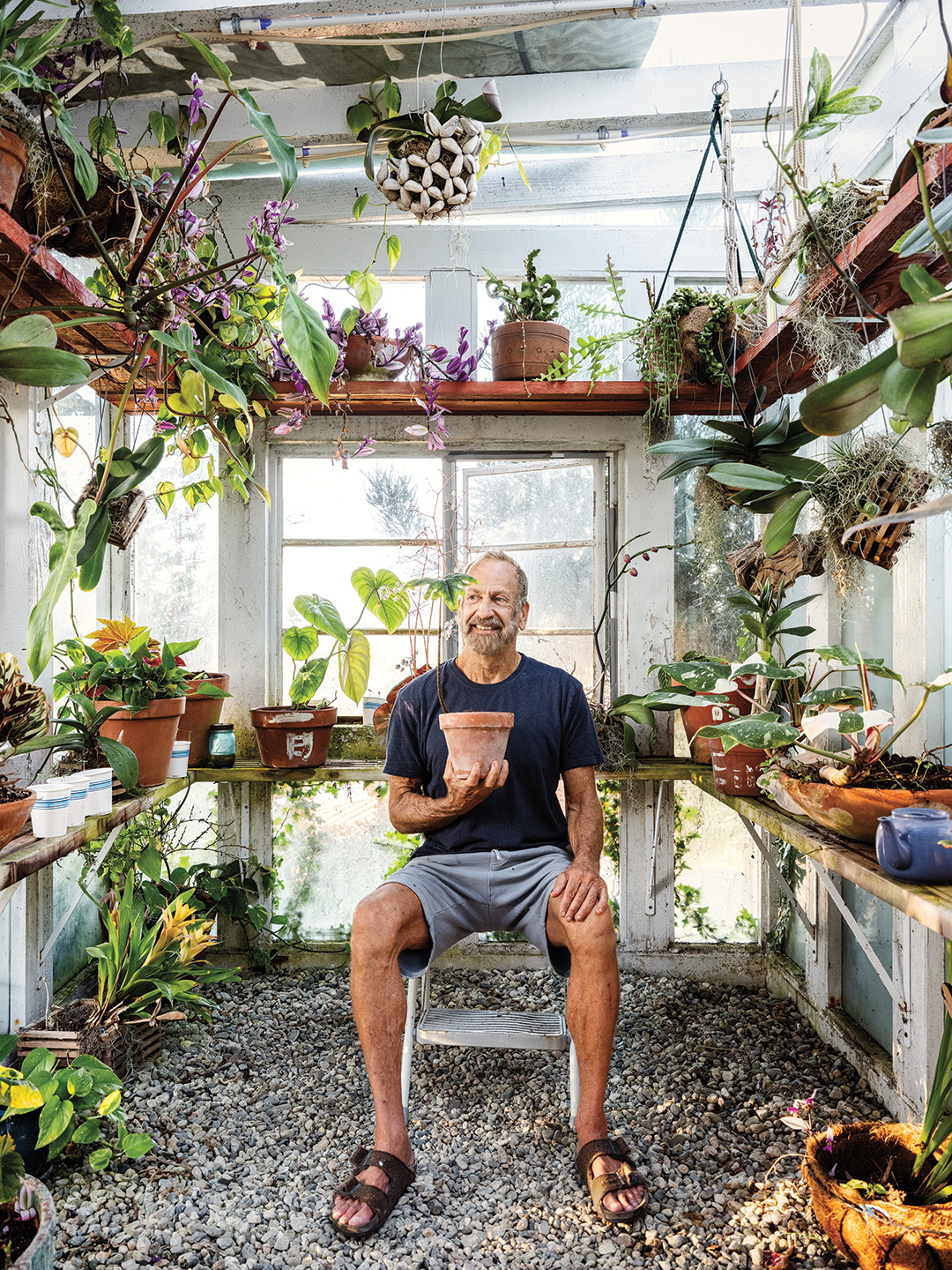
Hanging out in the kitchen of the midcentury storybook house in Culver City that Kenny Scharf has called home since 1999, it’s hard to believe the man making me a cup of coffee is also a pioneering pop surrealist who helped define New York City’s art scene in the 1980s. Dressed in a well-worn graphic T-shirt, black athletic shorts, and Crocs, he has just led me on a tour of his hand-built greenhouse, where he revives spent orchids rescued from the dumpsters of local nurseries. This man is the same artist who rose to fame alongside Andy Warhol, Keith Haring, and Jean-Michel Basquiat.
“I paint really intensely for a good six hours straight.”
Known for his futuristic sculptures and vividly colorful, cartoon-saturated pseudo-psychedelic paintings, the 67-year-old California native has works in the permanent collections of the Museum of Contemporary Art, Los Angeles; the San Francisco Museum of Modern Art; the Museum of Modern Art; and the Whitney Museum of American Art, among many other institutions worldwide. “In 1985, I was only 25 years old when I was included in the Whitney Biennial,” he says. “I was very young, and I thought, That’s it, you’ve made it.” It’s not a surprising admission. When he landed in the Big Apple six years earlier, Scharf was already obsessed with the mythology of Andy Warhol and The Factory. “The whole culture was so cool — I had to be in New York. Growing up in L.A., I knew there was an art scene, but my only connection with art would be, let’s say, seeing airbrushed vans or visits to The Huntington museum on special occasions to see [Thomas Gainsborough’s] The Blue Boy or Pinkie — you know, highfalutin kind of art.” Today’s budding creatives, on the other hand, have The Museum of Contemporary Art, the Getty, and The Broad — in addition to LACMA and The Huntington — to expand their horizons.
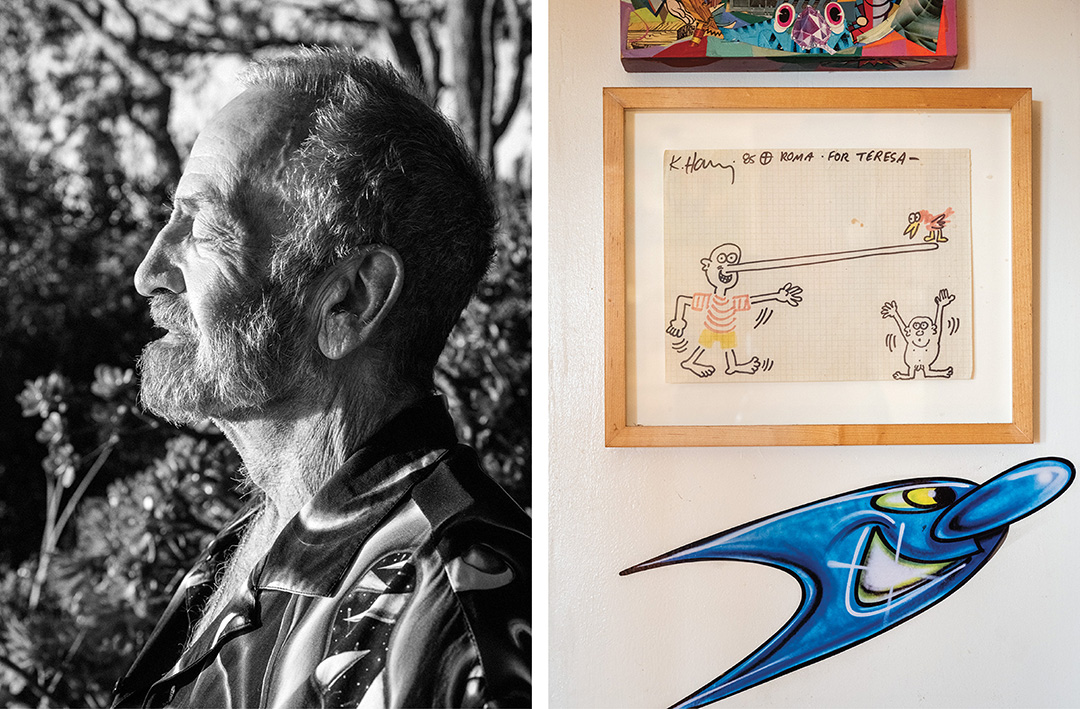
Born in late 1958 at Cedars of Lebanon Hospital on Fountain Avenue in Hollywood — now the Church of Scientology Pacific Area Command Base, known as “Big Blue” — Scharf grew up in the shadow of Tinseltown’s bright young things. “I went to Beverly Hills High with all those kids like Jamie Lee Curtis and Shaun Cassidy, who never gave me so much as a hello,” he says with a chuckle. “But when I moved to New York at 19 years old, in my very first week I met Keith Haring and Jean-Michel Basquiat and found myself on the stage at Max’s Kansas City nightclub with Klaus Nomi. Joey Arias and I were his dancers. Everything opened right up and it was exactly where I was supposed to be.” After graduating from the School of Visual Arts, Scharf became known for his immersive Day-Glo black-light installations, Cosmic Caverns, and began to show at revolutionary venues like MoMA PS 1, Fun Gallery, and Tony Shafrazi’s eponymous exhibition space.
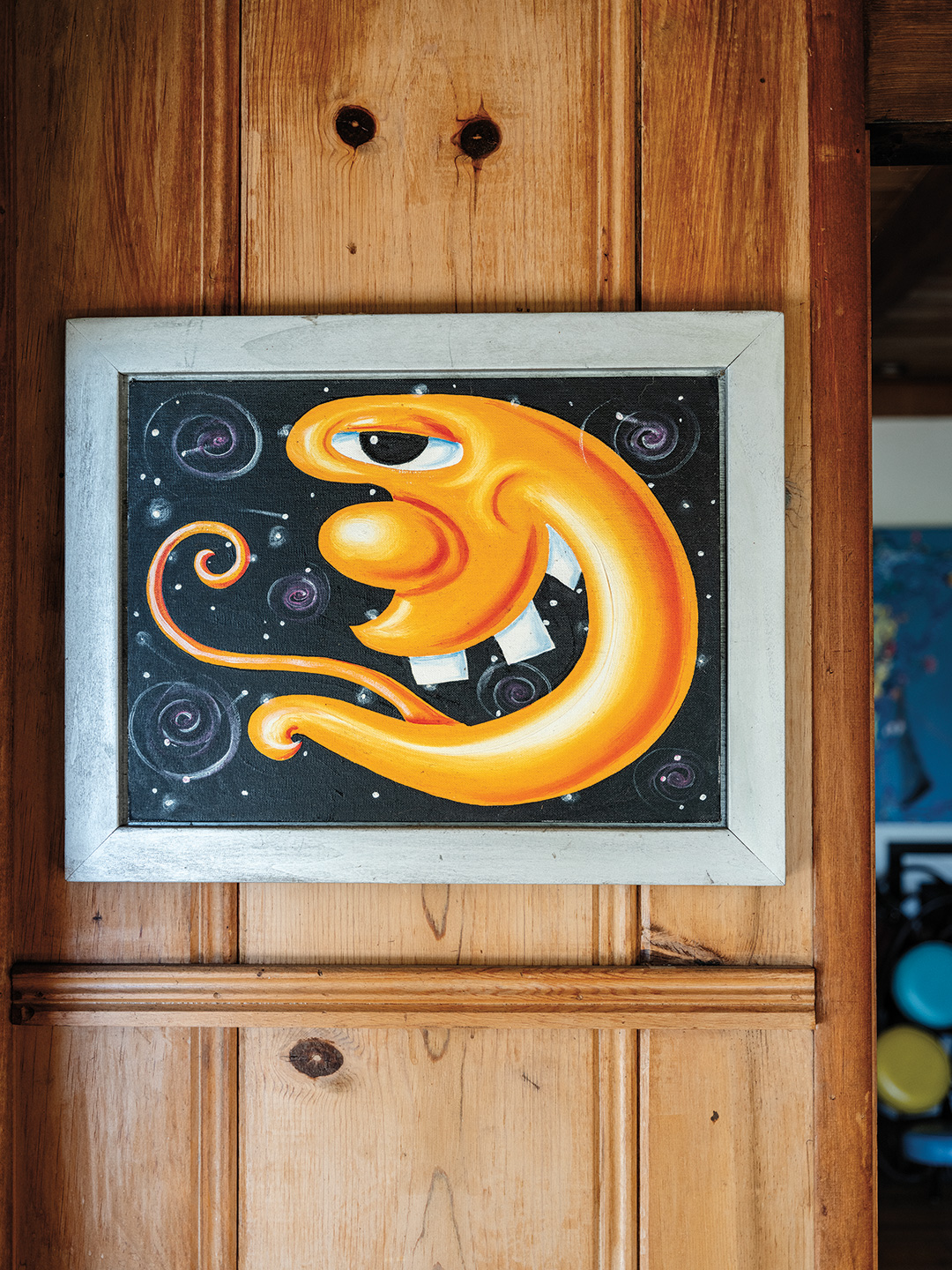
Four decades later, he’s represented by several top contemporary art galleries, including Honor Fraser Gallery in L.A., Totah in New York, and Almine Rech throughout Europe and Asia. In the past 10 years, auction results for his acrylic and spray paint works on canvas — often featuring cartoon characters like The Jetsons, Fred and Wilma Flintstone, Marge Simpson, and his own otherworldly characters — have reached well into the six-figure range. In a 2021 Christie’s New York 21st Century Evening Sale, Time Travel, a painting from 1984, fetched $870,000 — nearly three times its low estimate. Scharf’s brand collaborations, including those for Dior’s Fall 2021 men’s collection (“Kim Jones sent me a message on Instagram and was like, ‘Do you want to do something together?’ — and oh my God, it was huge”) and Mattel, for which he created a signature “Karbombz!” design for the Hot Wheels Garage of Legends series in 2025 (“It was like a dream come true because as a kid I was obsessed with Hot Wheels”) have brought him to the attention of a younger, wider audience beyond the art world.
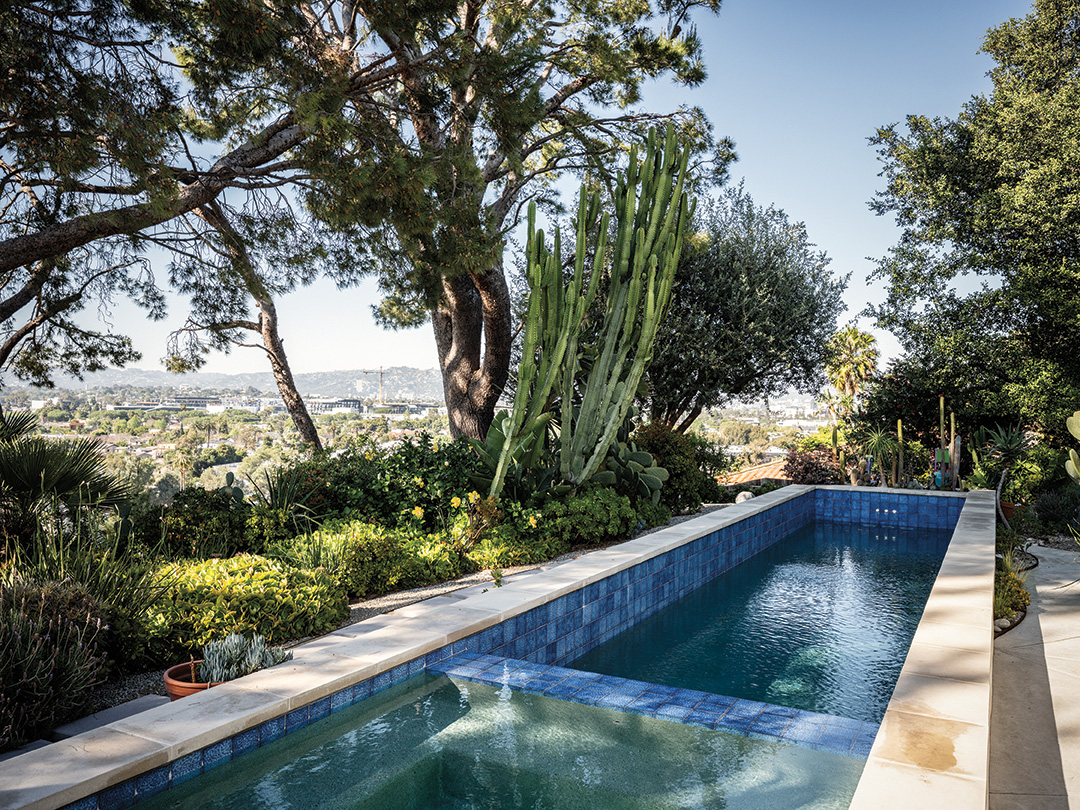
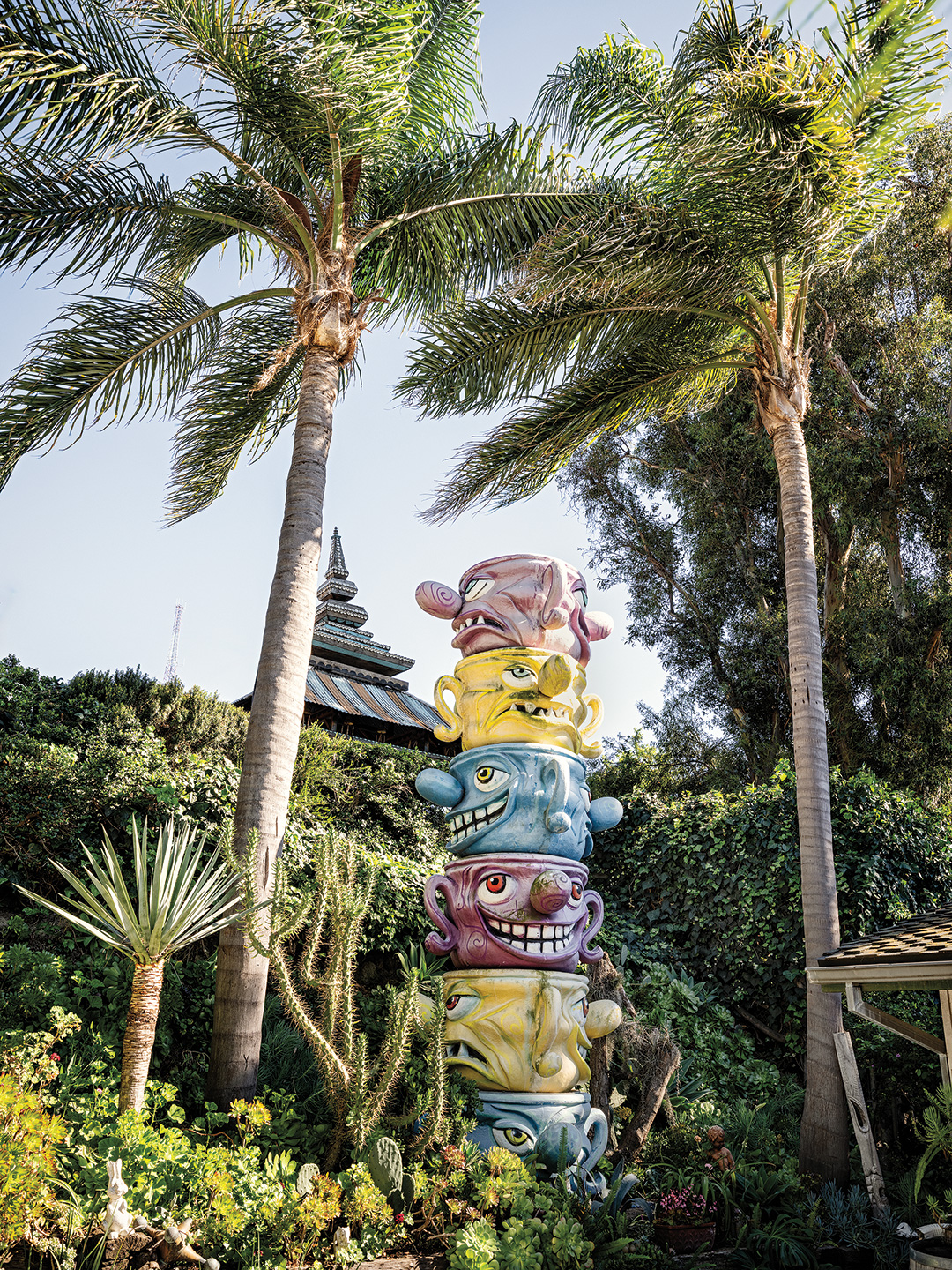
Nestled alongside Baldwin Hills Scenic Overlook — a 58-acre state park nine miles southeast of Downtown L.A. — Scharf’s modest 1959 three-bedroom, two-bathroom perch is surrounded by propagated dragon trees, flowering geraniums, thickets of ivy, and clusters of succulents. And with unparalleled views stretching from the Pacific Ocean to the Hollywood sign and mountains beyond, it is far removed from the energy and urban grit of New York 50 years ago. But, even at first glance, the terraced property feels more like an immersive installation at the Fun Gallery (the first to host solo shows by street artists like Scharf, Haring, Basquiat, and Fab 5 Freddy) with dozens of his monumental sculptures placed whimsically around its perimeter. “It basically started when things didn’t sell — the bronzes and ceramics that never found a home — and I didn’t want to store them,” he says of the countless works while gesturing to some erected in the direction of a lively koi pond. “That one’s from the ’80s and those two are probably 20 years old.” Elsewhere, a collection of life-size memorabilia he purchased from Bedrock City (the shuttered theme park in Arizona inspired by The Flintstones) — including the Flintmobile, Barney Rubble’s bed, and a statue of Dino that he painted iridescent purple — offers a glimpse into the artist’s private, colorfully constructed world.
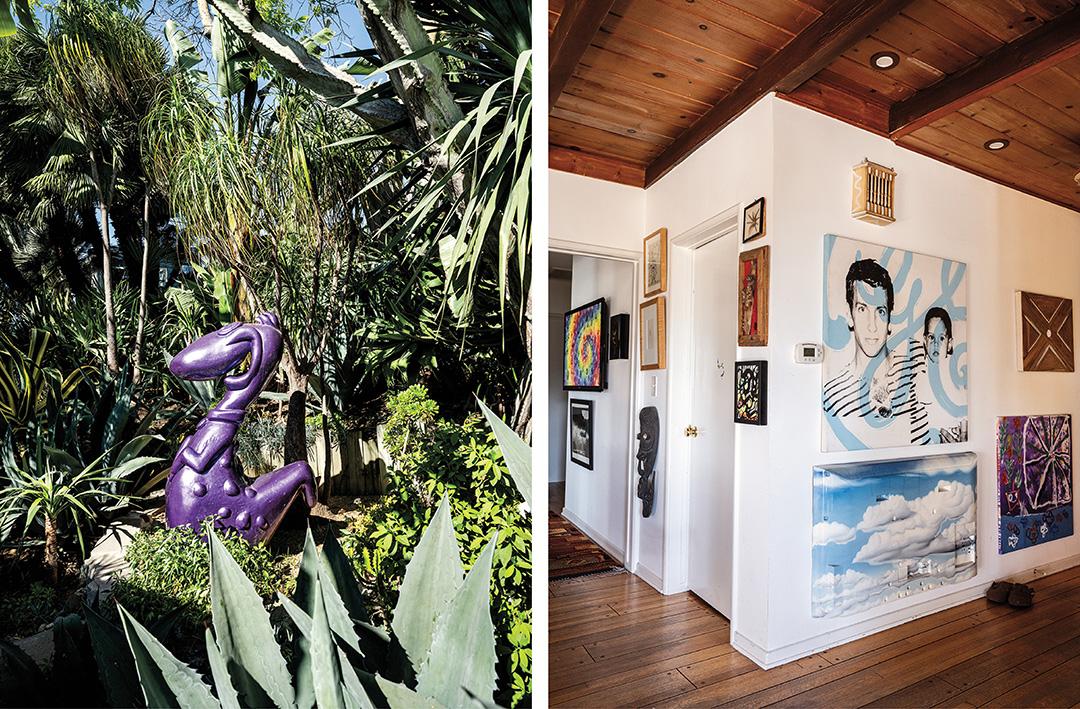
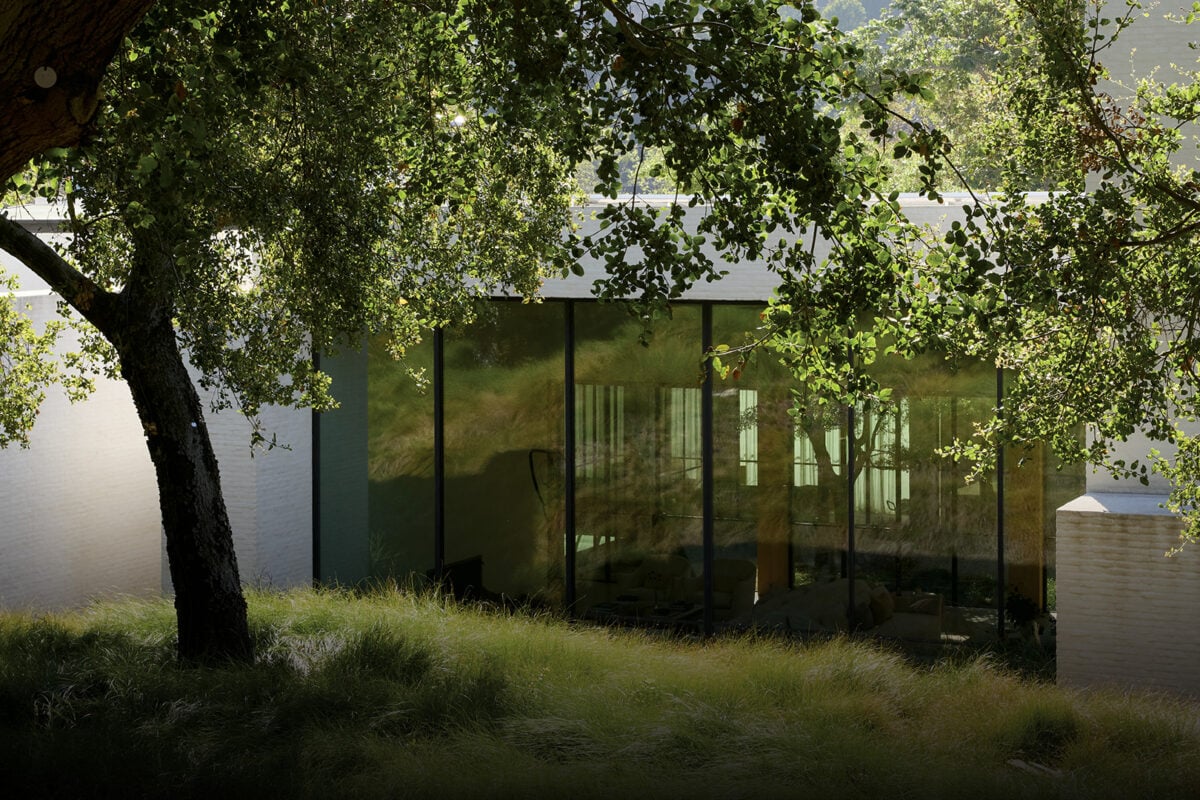
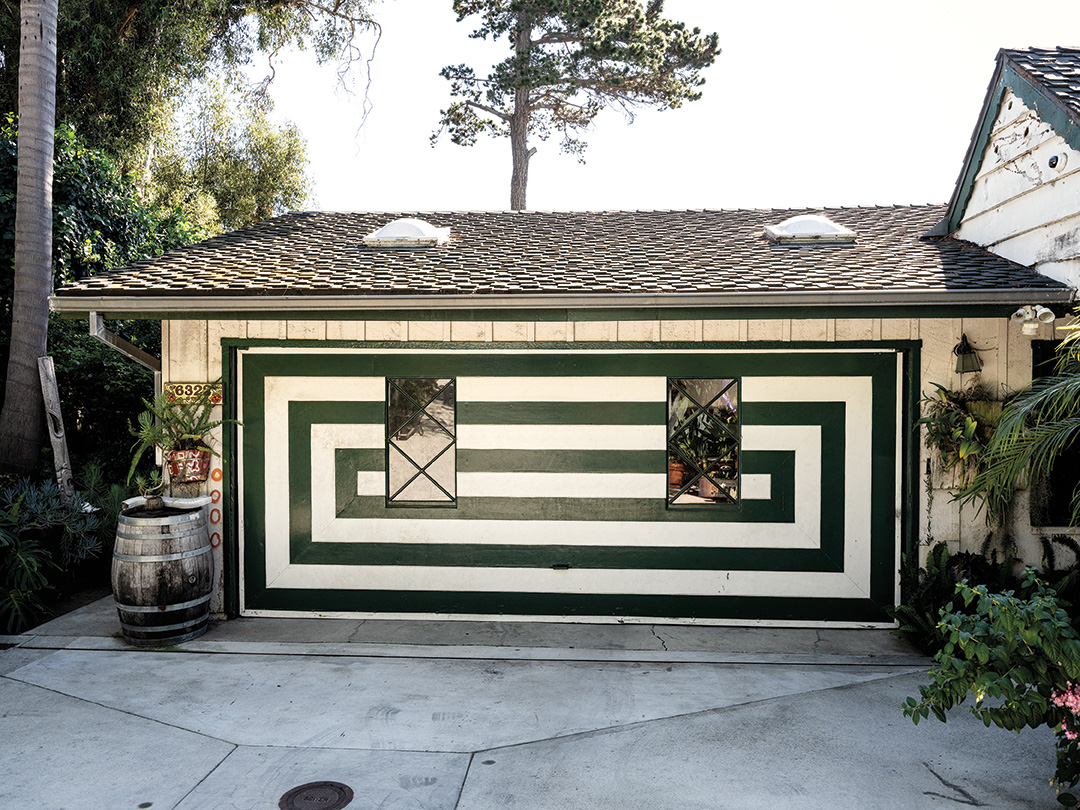
From the outside, the house itself — with its sun-worn, wood-clad white facade, peeling green trim, and amber “bubble glass” inset front door — is utterly traditional, except for the jungle of greenery and objets d’art enveloping it. The inside, however, is a different story altogether: Think Swiss chalet–themed Yoga Korunta studio meets the set of The Brady Bunch, where rooms are little time capsules bedecked with rustic furnishings, flea market finds, unusual accoutrements, and museum-worthy works of art. The living room is outfitted with a system of wall-mounted Iyengar yoga ropes — and a pelvic swing anchored to its ceiling — that Scharf uses daily to stay centered and in shape. “I actually made that sofa and lamp,” he says, pointing to the sinewy metal-framed furnishings that juxtapose a George Nelson Marshmallow sofa. “I had this crazy Victorian house in upstate New York that was featured in House & Garden back in 1985. I couldn’t afford anything I liked, so I made all the bent metal furniture for it,” Scharf says. In the kitchen, the built-in brown appliances, copper backsplash, overhead cabin lamp, and scallop-trimmed cabinetry — complete with a birdhouse over the range — are all original and charmingly outdated. Over the sticker- and magnet-clad refrigerator hangs a Roy Lichtenstein Paper Plate from 1969; above the sink is a framed childhood painting of four chickens. “I made that when I was 7 years old,” he says.
Nearly every bit of wall space is taken up by an impressive and eclectic array of artwork, some by his own hand and others by cherished friends like Robert Maplethorpe, Dennis Hopper, Andy Warhol, Francesco Clemente, Keith Haring, and Cindy Sherman, to name a few. “This one’s really tough — it’s the very last thing Keith ever tried to draw,” he says as we view the framed black outline of a half-complete Radiant Baby that, at less than an inch long, is undeniably moving. “He just couldn’t finish it.” Haring died soon after, in February 1990, of AIDS at age 31. Other earlier marker drawings by the graffiti artist dedicated to Scharf’s daughters, Zena and Malia, are equally stirring. “Keith was Zena’s godfather,” he says as I read aloud the phrase written along the left-hand side of one depicting an elephant doing a handstand on a kid’s head, dated 1985: “For the loveliest girl in the world — K. Haring.”
“When you feel alone and it’s hard, you go to your art as solace, and you make great art.”

As we continue chatting, Zena appears with her dog, Scooby, for whom a bowl of water is already waiting by the kitchen door. She lives close by and visits frequently with her two children. “They’re 13 and 11 years old and they love to sleep over, and we have dinner together quite often,” he adds. “My other girl, Malia, lives in Woodstock, New York, and has a 5-year-old boy.” He says they’re preparing for a family trip to Brazil (where he met their mother, whom he has remained close to after their divorce). “Before we go,” he says, “I’m trying to finish up new oil paintings for a show [that opens] at the end of May at Nanzuka gallery in Tokyo.” Then, almost as an afterthought, he mentions Kenny Scharf: Emotional, an exhibition that opened last summer in China at the Modern Art Museum Shanghai and has traveled to the Hubei Museum of Art in Wuhan (it’s on view through the end of June) — and another show, opening in June, at the Nakamura Keith Haring Collection just outside Tokyo. “That one will have some larger pieces including five sculptures and a Cadillac I painted back in 1985 [on loan from another collection in Japan].” Locally, his last solo exhibition, GO WILD!, was held at Honor Fraser Gallery in the summer of 2024. But given his work ethic, a new show could be in the works. “I sit and paint really intensely for a good six hours straight,” he says of his daily routine. “I start at around 11 a.m. and have about 10 [pieces] going on at the same time.”
Despite his success — early and recent — the recognition and reverence for his late friends and contemporaries such as Warhol, Haring, and Basquiat has eluded him. Perhaps it’s partly because the oeuvres of these superstars were capped by their premature deaths within a five-year span, whereas Scharf’s output continued — and possibly because museum curators and art world arbiters have, until now, eschewed his work. “I’ve been trying to get more museum [shows and interest] going for decades, and those doors are finally starting to open,” he says of his late-career achievements. “There are a lot of reasons for that, but I’d like to think it’s because my art is standing the test of time and, maybe, the gatekeepers in the art world are changing. I always had the kids loving my work, and now those kids are grown up.”
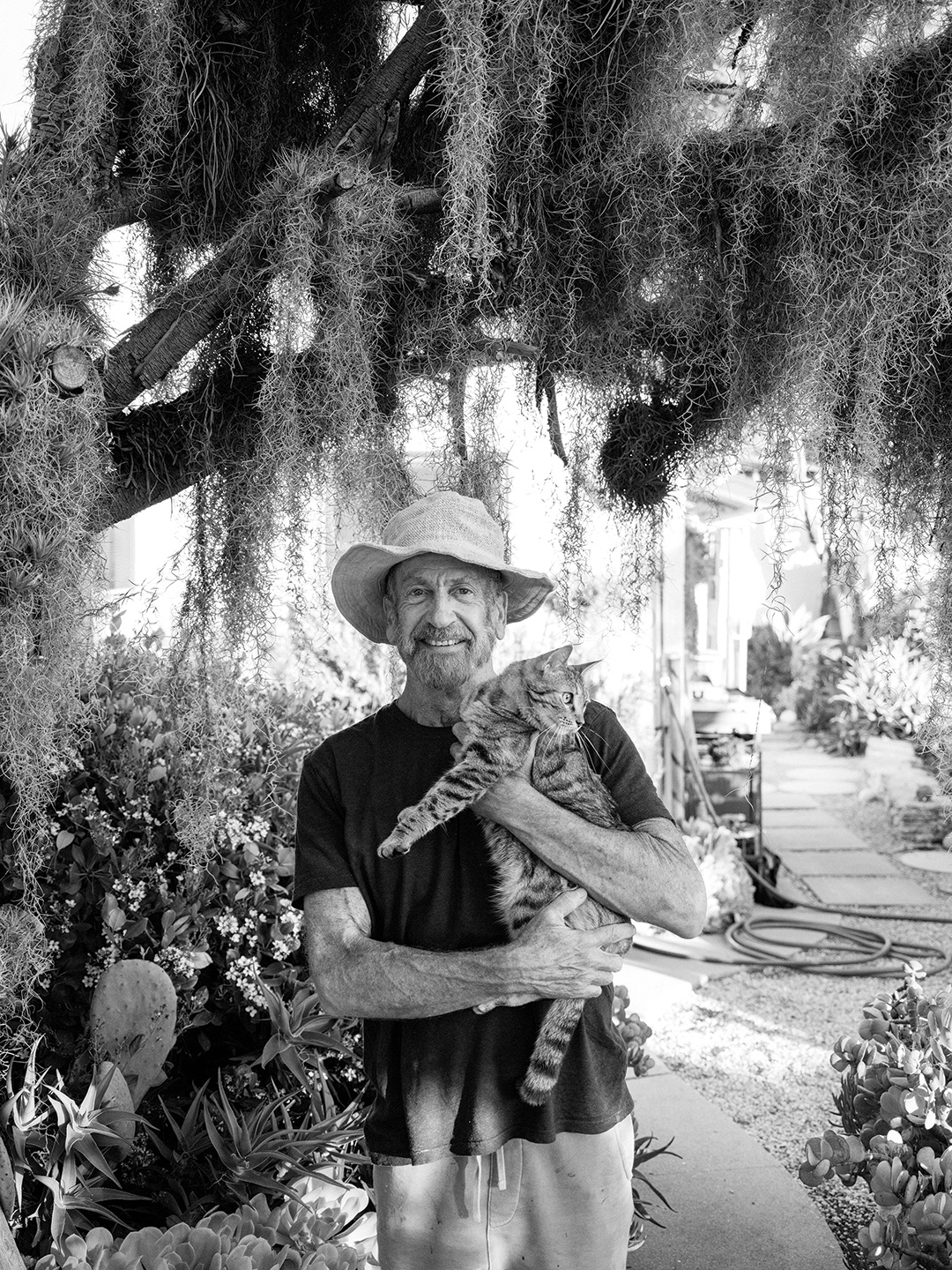
As our afternoon together comes to an end and Scharf prepares for the 20-minute bike ride to his Inglewood studio, the artist offers a final thought about his métier. “I’ve come to the conclusion that when you’re not being celebrated — when you feel alone and it’s hard — you go to your art as solace, and you make great art,” he says. “But the truth, for me, is that when you are celebrated it feels so fucking much better.”
Feature image: A stacked totem pole sculpture by the artist welcomes visitors to his home.
This story originally appeared in the Fashionable Living 2026 issue of C Magazine.
Discover more DESIGN news.
See the story in our digital edition